
News and Blogs

Not All Kids Are Triaged Equally: Disparities in Pediatric Behavioral Health ED Visits

Not All Kids Are Triaged Equally: Disparities in Pediatric Behavioral Health ED Visits

When children arrive at the emergency department (ED) with behavioral health symptoms like suicidal thoughts, anxiety, or behavioral crises, a triage nurse quickly decides how urgently they need care. But does this process work equally well for all children? A new PECARN study “Overtriage and Undertriage of Children Presenting to the Emergency Department for Behavioral […]


From the ER to Prime Time: The PECARN Febrile Infant Rule Goes Mainstream

From the ER to Prime Time: The PECARN Febrile Infant Rule Goes Mainstream

When a physician in the Season 2 premiere of the medical drama The Pitt invoked PECARN protocols while evaluating a febrile infant in the emergency department, millions of viewers witnessed something remarkable: a decade of painstaking research distilled into a single clinical decision. The landmark study behind that moment, “A Clinical Prediction Rule to Identify […]

One Step Ahead: Can AI Predict Pediatric Sepsis?

One Step Ahead: Can AI Predict Pediatric Sepsis?

Sepsis kills children. It is a leading cause of pediatric death, with an in-hospital mortality of 5-20% in the United States [1, 2]. Early recognition and treatment improve outcomes, but predicting which emergency department (ED) patients will develop sepsis remains a major clinical challenge. Current sepsis screening tools are designed primarily to identify children who […]

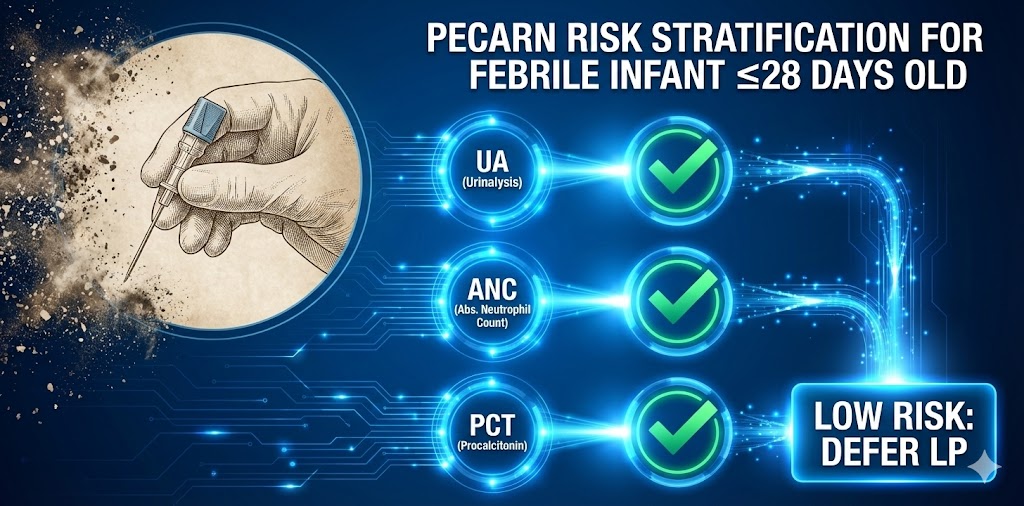
The End of Routine Lumbar Punctures for the Febrile Infant 28 Days and Younger?

The End of Routine Lumbar Punctures for the Febrile Infant 28 Days and Younger?

For decades, the teaching in pediatric emergency medicine has been consistent: “Young febrile infants (0-28 days) with fevers get a full sepsis workup.” This traditionally means blood, urine, and cerebrospinal fluid (CSF) cultures, followed by admission and antibiotics. The fear of missing bacterial meningitis—a devastating infection—has driven this aggressive approach. But is a lumbar puncture […]